Search results for: “modest”

  • 19 Festive Modest 4th of July Outfit Ideas For Women

    19 Festive Modest 4th of July Outfit Ideas For Women

    Disclosure: Some of the links below are affiliate links. At no cost to you, I will earn a commission if you click through and make a purchase. 

    You’ll love these modest 4th of July outfit ideas for women. This list has so many festive clothing items styled by fashion bloggers for their summer outfits.

    You can shop some of these looks using the links.

    1. Stars Dress Outfit

    Stars Dress Outfit

    image credit

    Shop this look:

    • Similar dress here
    • Another similar dress here
    • Similar shoes here

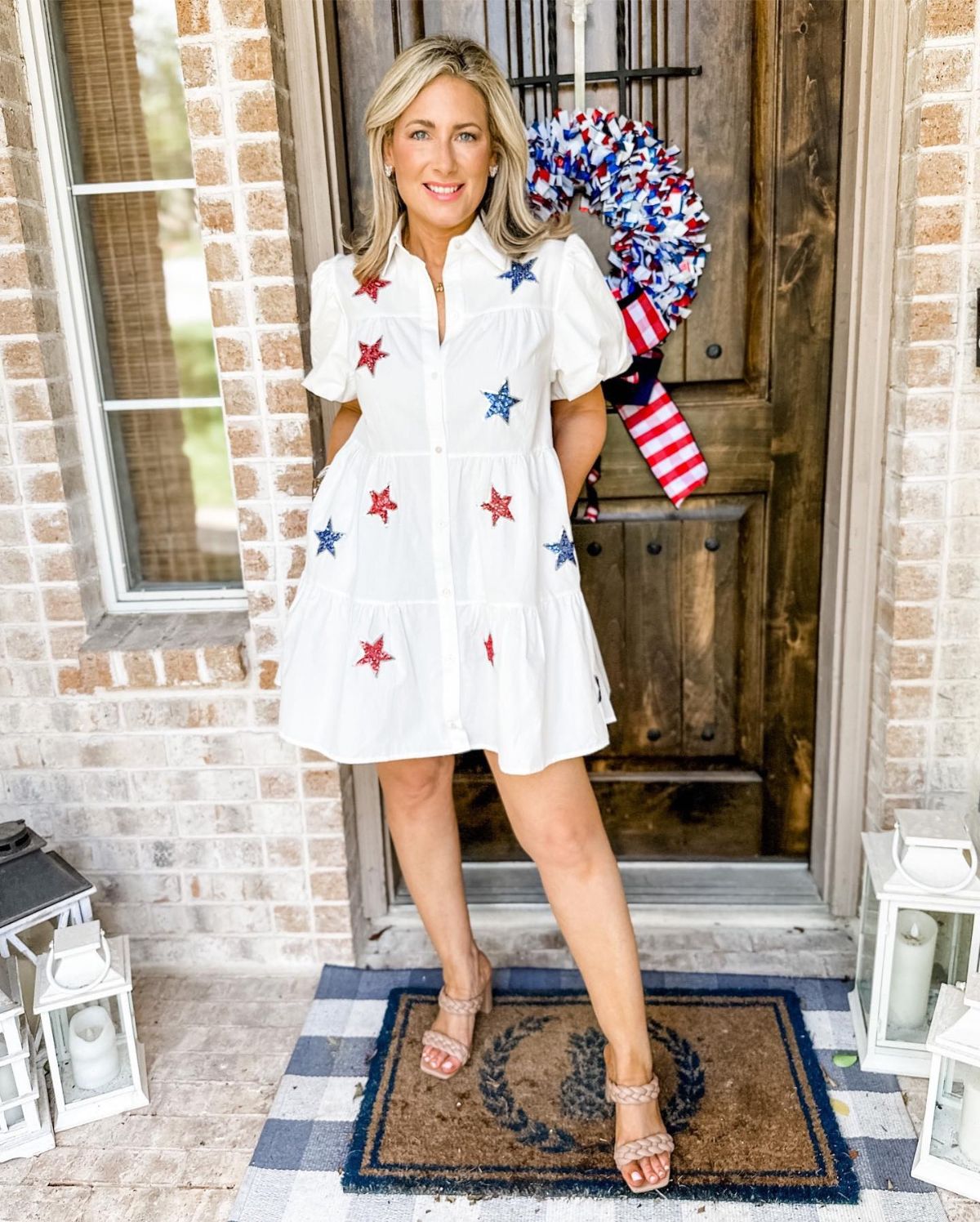
    This outfit is so festive and fun for the 4th of July! She is wearing a white dress that has red and blue stars on it.

    She is also wearing tan sandals heels. This would be perfect for wearing to a BBQ!

    2. Cute Outfit for 4th of July

    Cute Outfit for 4th of July

    image credit

    Shop this look:

    I love how this outfit is red and blue, but more subtle. She is wearing a navy blue short sleeve dress with a tie at the waist and red shoes.

    This is perfect for wearing to church or an outdoor event.

    3. Navy Blue Dress Outfit

    Navy Blue Dress Outfit

    image credit

    Shop this look:

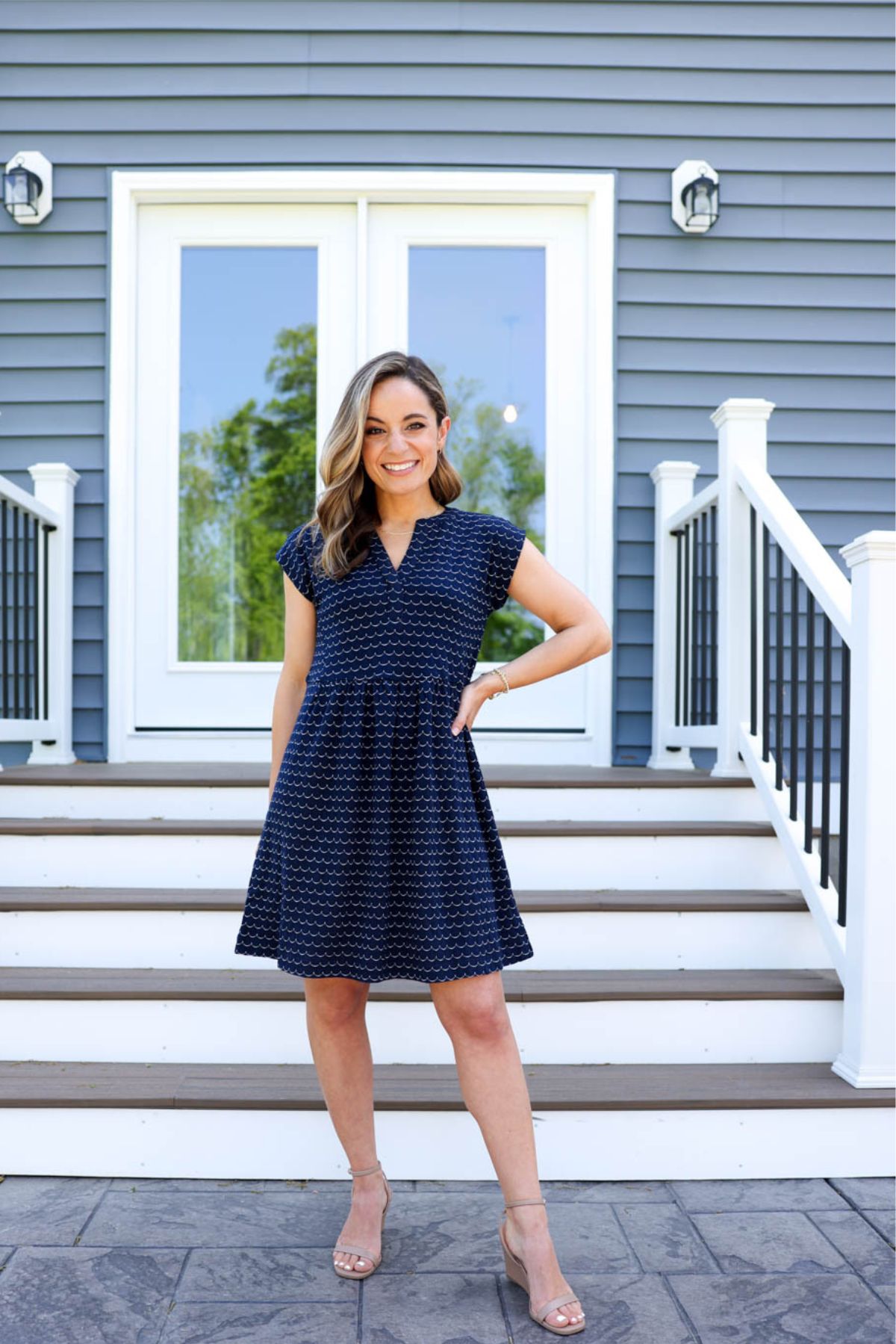
    I love how this 4th of July outfit is simple, but still festive!

    She is wearing a short sleeve navy blue dress and cream colored wedges.

    4. 4th Of July Outfit With Birkenstocks

    4th Of July Outfit With Birkenstocks

    image credit

    Shop this look:

    • Birkenstock sandals here
    • Similar shirt here
    • Similar jeans here

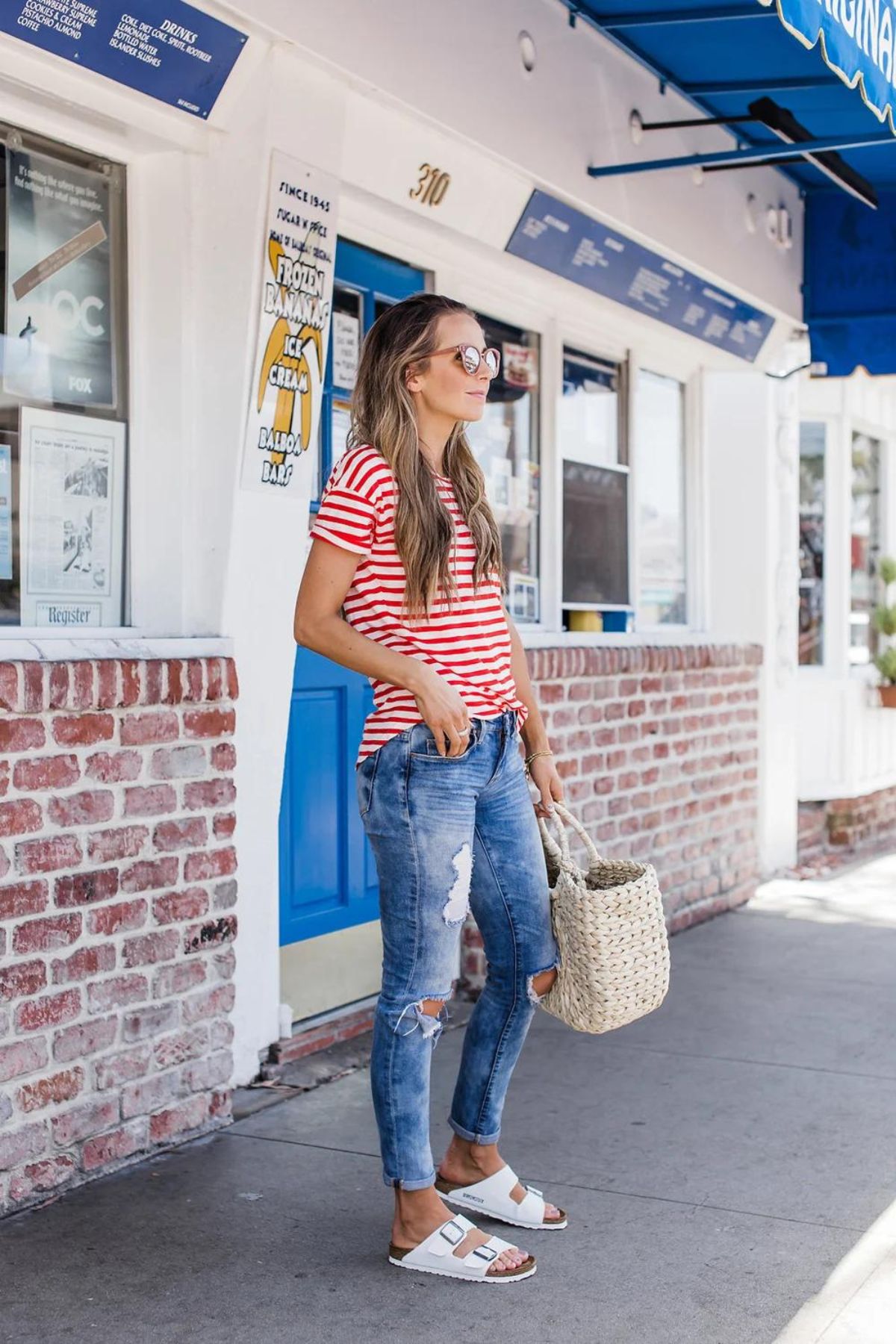
    This cute 4th of July outfit is really cute and festive. She is wearing white Birkenstocks with a red and white striped shirt and distressed jeans.

    5. Striped Dress For the 4th of July

    Striped Dress For the 4th of July

    image credit

    Shop this look:

    This modest 4th of July outfit is so cute to wear all summer long.

    She has on a navy blue and white striped dress with a tan bag and tan flats.

    6. American Flag Tee With Striped Pants

    American Flag Tee With Striped Pants

    image credit

    Shop this look:

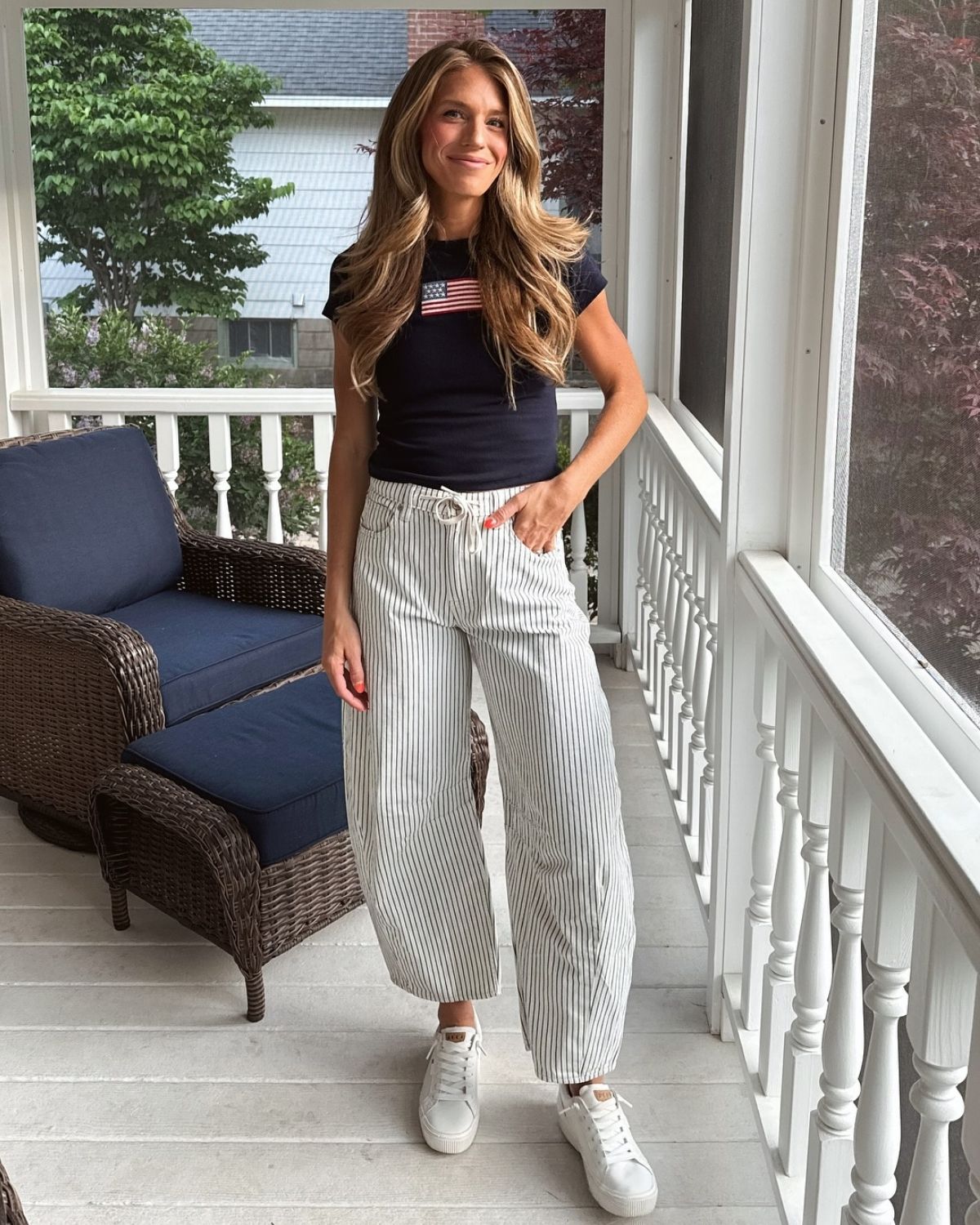
    This fourth of July outfit is very trendy and modern.

    She is wearing a navy blue flag shirt, striped pants, and white sneakers.

    7. Striped Maxi Dress Outfit

    Striped Maxi Dress Outfit

    image credit

    Shop this look:

    • Similar dress here
    • Similar jacket here
    • Similar sandals here
    • Similar purse here

    This is a great modest option for the 4th of July.

    She is wearing a red and white striped maxi dress with a white denim jacket, white sandals, and a straw purse.

    8.

    Keara Brady's modest 4th of July outfit

    Keara is wearing a fun red and white striped hoodie dress with white Converse tennis shoes.

    I love how she added some blue into her outfit with her baseball hat and watch.

    Shop this look:

    9.

    Kate Hancock's red white and blue outfit

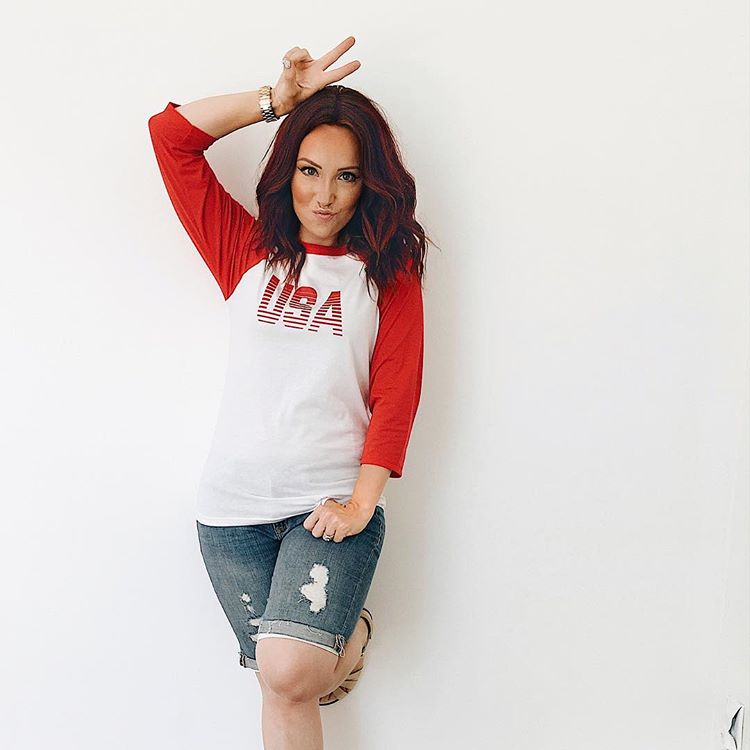
    Kate Hancock has on a casual baseball tee that is white with red sleeves and says USA on it. She paired it with denim shorts.

    Shop this look:

    • Similar shorts here
    • Similar shirt here

    10.

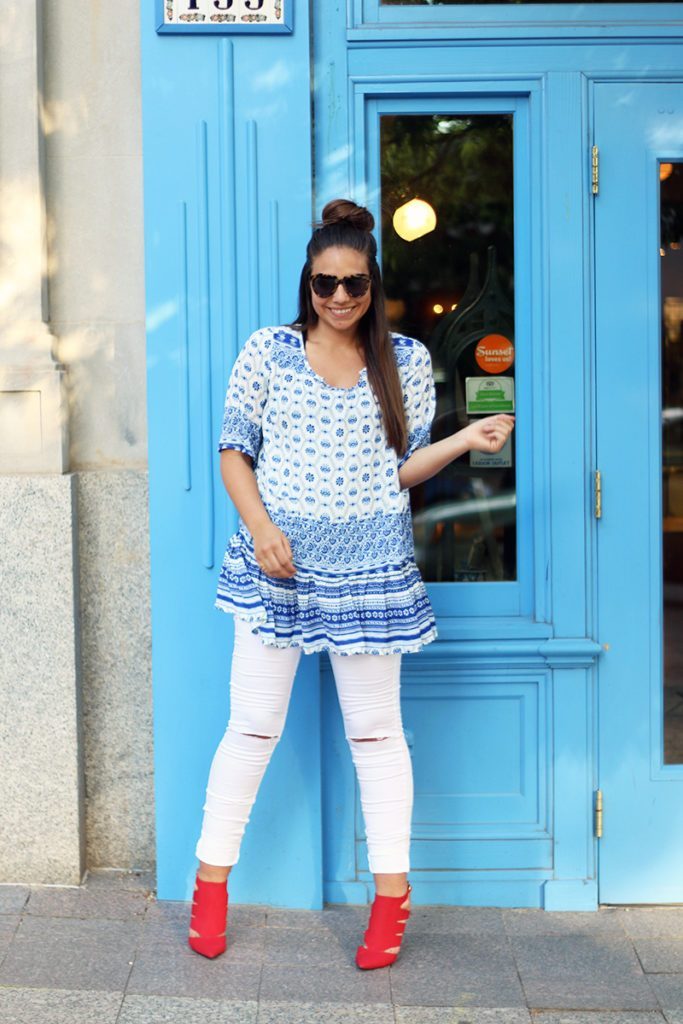
    Lauryn Lasko styling for the 4th of July

    Lauryn Lasko Hock of Lauryncakes is wearing a blue and white patterned print shirt with white pants and red heels.

    Tops like this are nice because you can wear them for 4th of July and after the holiday.

    Shop this look:

    • Similar jeans here
    • Similar shirt here

    11.

    Kayla Smith wearing an outfit with red, white and blue.

    Kayla Smith put together an outfit for the 4th using a short sleeve red t-shirt that says USA, light denim jeans, and white Converse shoes.

    Shop this look:

    12.

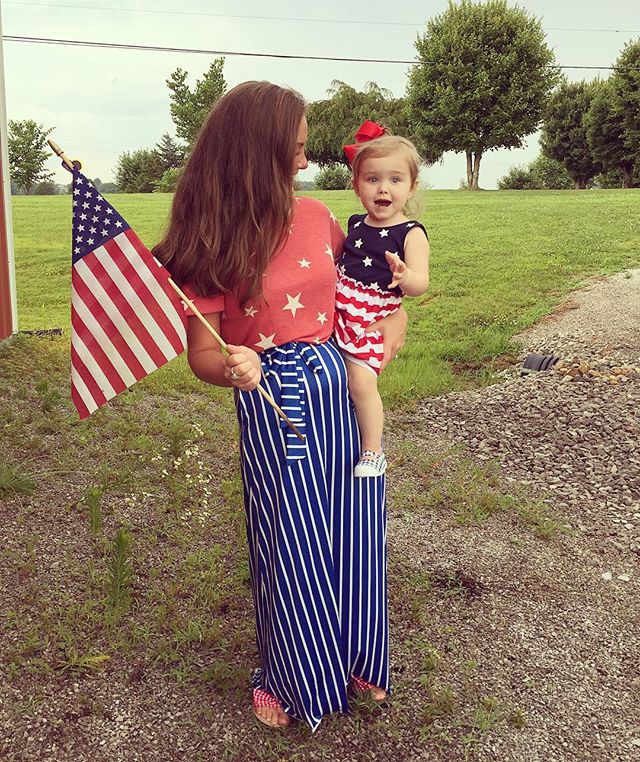
    Bethany Henson wearing a blue and white maxi dress with a red shirt

    Bethany Henson has on one of the cutest modest outfits for the 4th of July.

    She is wearing a light red shirt that has white stars and a blue and white striped maxi skirt. She even dressed her baby up!

    Shop this look:

    • Similar skirt here

    13.

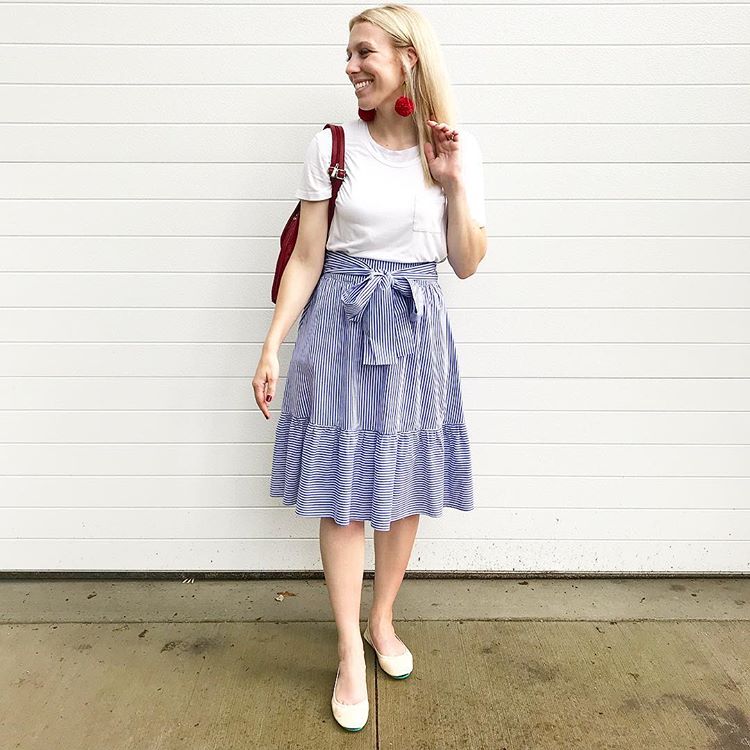
    Taylor Jones styling for the 4th of July holiday

    Taylor Jones is wearing a dressier look that consists of a white shirt, red earrings, a high-waisted blue shirt, and white flats.

    Shop this look:

    • Similar skirt here
    • Similar earrings here

    14.

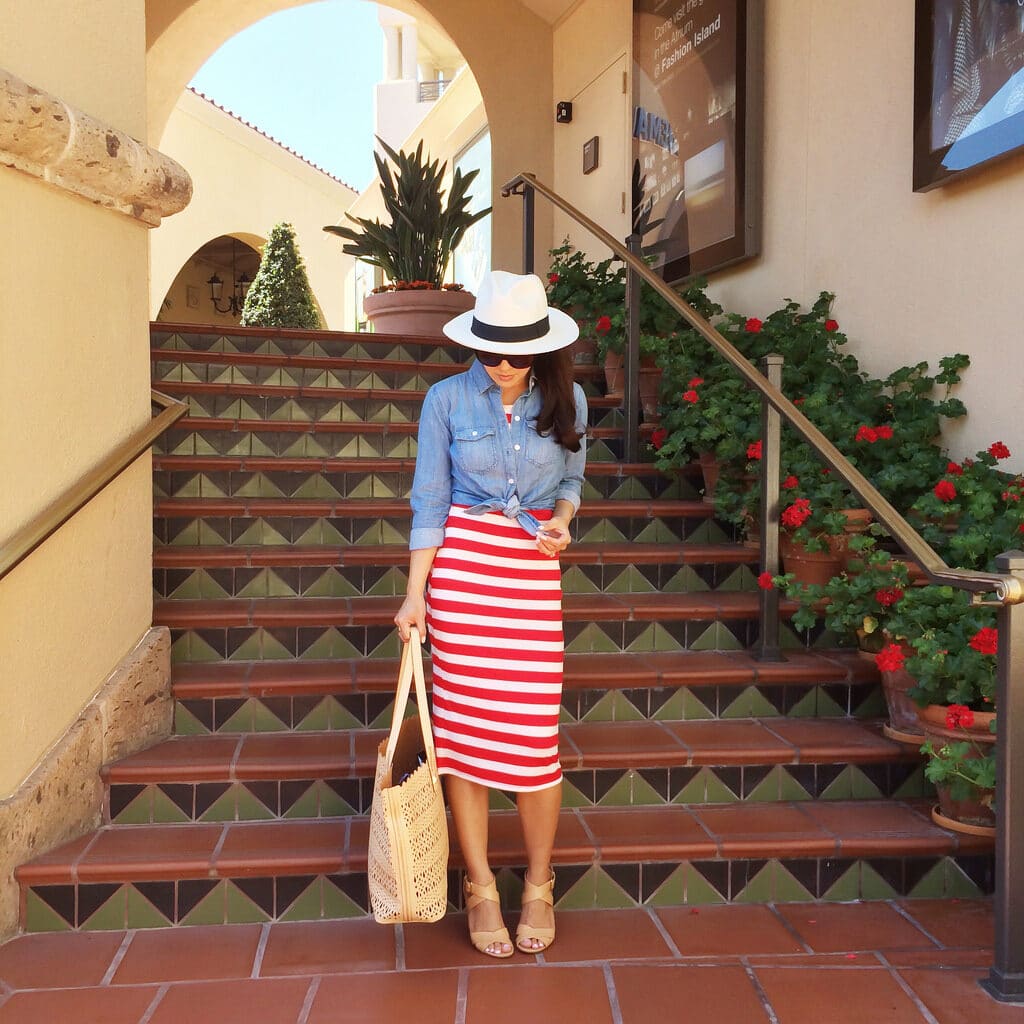
    Annie Mai Thai wearing a red and white striped skirt, blue shirt, and white hat.

    What Annie Mai Thai put together is so cute and trendy. It would be a great outfit for if you’re on vacation for the holiday.

    Annie is wearing a red and white striped bodycon dress with a denim or chambray shirt over it.

    She rolled up the sleeves on her shirt and tied the ends up. She also has on sandals and a hat.

    You could also recreate this looks with maxi dresses instead of a midi one.

    Shop this look:

    15.

    Merrick's 4th of July outfit.

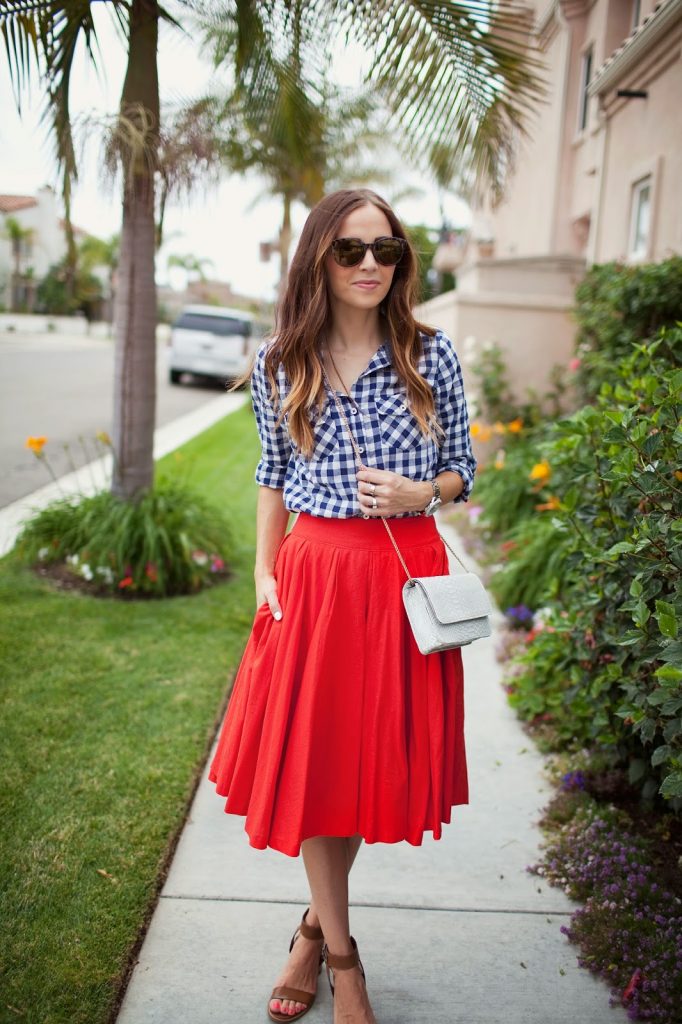
    Merrick White is wearing a 4th of July outfit that you could even wear to church.

    She has on a blue and white gingham button down shirt, a flowy red skirt, black sunglasses, and sandals.

    Shop this look:

    • Similar skirt here
    • Similar shirt here

    16.

    Modest Mom Blog fourth of July outfit

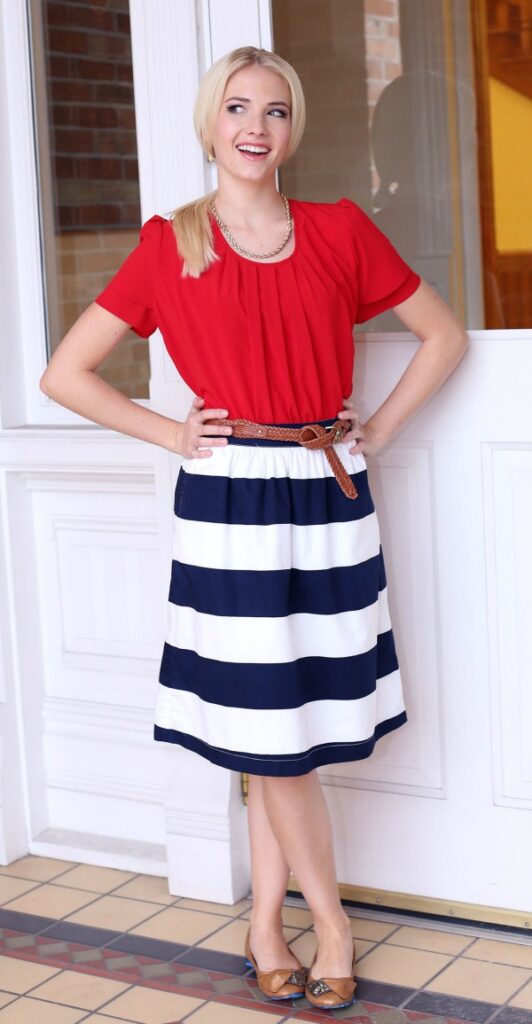
    This festive outfit is a bright red shirt with a navy blue and white a-line skirt. 

    Shop this look:

    • Similar skirt here

    17.

    4th of July outfit from LifeStyledSisters

    This outfit by the Lifestyled Sisters is so simple and easy to recreate.

    It’s a deep red and white striped midi dress with a jean shirt tied around the waist, and paired with white tennis shoes.

    Shop this look:

    18.

    Rachel Parcell's fourth of July outfit.

    Rachel Parcell has on a really classy outfit.

    She is wearing a navy blue anchor print shirt with a pleated red and white skirt, and tan heels. It is so chic looking.

    Shop this look:

    • Similar heels here

    19.

    4th of July outfit featuring overalls

    Jensyn from Stripes in Bloom made a casual 4th of July outfit with skinny denim overalls, wedges, and a red and white striped shirt.

    She has such a fun view on dressing modestly.  

    Shop this look:

    • Similar overalls here
    • Similar shirt here
    • Similar shoes here

    Pin this image so you can find this post later!

    fourth of july outfit ideas

    As an Amazon Associate I earn from qualifying purchases.

  • Planning a Small Farm or Homestead: Trees, Poultry Feed, and Horse Care Costs

    Starting a small farm or homestead demands more than enthusiasm and acreage. Prospective farmers must calculate recurring expenses for fruit and shade trees, monthly poultry feed bills that range from fifteen to twenty dollars per dozen hens, and horse maintenance costs averaging three to five hundred dollars monthly. These figures represent only baseline expenditures before accounting for infrastructure, veterinary care, and seasonal variables. Understanding these financial realities separates successful operations from abandoned dreams, making thorough cost analysis the foundation of any viable homestead plan.

    Defining Your Small Farm or Homestead Goals

    Before breaking ground or purchasing livestock, prospective farmers must establish clear, measurable objectives that align with their available resources and long-term vision. Goals should specify whether the operation prioritizes self-sufficiency, supplemental income, or commercial production.

    Financial targets must account for startup costs, including infrastructure, equipment, and initial livestock purchases. Space requirements vary considerably between enterprises, poultry operations demand different acreage than horse boarding facilities.

    Timeline considerations affect tree selection, as fruit-bearing species require multiple years before yielding harvests. Risk tolerance influences diversification strategies; some farmers concentrate on single commodities while others distribute resources across multiple revenue streams.

    Documentation of these objectives creates accountability benchmarks and guides decision-making throughout development phases. Realistic goal-setting prevents overextension and positions operations for sustainable growth.

    Evaluating Land Soil Water and Climate Conditions

    Once objectives are established, farmers must conduct thorough site assessments to determine land suitability for intended enterprises. Soil testing reveals pH levels, nutrient content, drainage capacity, and texture, critical factors affecting crop production and pasture quality. Water availability requires evaluation of sources including wells, ponds, streams, and municipal connections, along with rights and seasonal reliability.

    Climate analysis examines temperature ranges, frost dates, precipitation patterns, and growing season length to select appropriate plant varieties and livestock breeds. Topography influences erosion potential, equipment access, and building placement. Existing vegetation indicates soil fertility and drainage characteristics.

    Microclimates created by slopes, windbreaks, and structures affect production zones. Legal restrictions such as zoning ordinances, easements, and environmental regulations may limit farming activities. Extensive site evaluation prevents costly mistakes and guides realistic planning.

    Planning Zones for Crops Animals Buildings and Utilities

    Strategic zoning divides the property into functional areas that optimize efficiency, minimize labor, and reduce conflicts between incompatible activities.  Zone 0 encompasses the dwelling and immediate surroundings, requiring daily attention. Zone 1 includes intensive gardens, greenhouses, and frequently visited livestock like chickens, positioned within easy walking distance. Zone 2 accommodates larger animals such as horses, requiring less frequent care, along with orchards and larger crop areas.

    Buildings should cluster near utilities and access roads while maintaining appropriate distances from water sources to prevent contamination. Livestock structures need drainage considerations and prevailing wind assessment to direct odors away from living spaces. Crop zones require sun exposure analysis and irrigation access. Feed storage placement between dwelling and animal areas reduces transport effort. Utility corridors for water, power, and waste management connect zones efficiently.

    How to Buy Trees for Orchards Shade and Windbreaks

    Trees represent one of the longest-term investments on a small farm or homestead, making informed purchasing decisions particularly important. Bare-root trees cost considerably less than containerized specimens and establish equally well when planted during dormancy. Purchase from reputable nurseries that specify rootstock varieties, disease resistance, and chill hour requirements for fruit trees. Homeowners who plan to buy trees in Fort Collins should prioritize species and cultivars suited to the area’s climate and growing conditions. Local agricultural extension offices maintain lists of recommended cultivars for specific regions.

    Windbreak trees should be purchased as smaller whips, which transplant more successfully and grow faster than larger specimens. Order deciduous shade trees as two-to-three-year-old stock for best establishment rates. Inspect all trees before purchasing, rejecting those with circling roots, damaged bark, or dried rootballs. Verify proper hardiness zones and mature sizes match intended locations. Consider purchasing in bulk through cooperative orders to reduce per-tree costs considerably.

    Raising Poultry for Eggs Meat and Farm Sustainability

    Poultry provides the quickest return on investment of any livestock enterprise, with chickens producing eggs within five to six months and reaching market weight in eight to twelve weeks. A small flock of 25 laying hens can produce 18-22 eggs daily during peak production, meeting household needs while generating surplus income.

    Dual-purpose breeds like Plymouth Rocks and Orpingtons serve both egg and meat production, maximizing efficiency for small operations. Housing requirements remain minimal, four square feet per bird indoors and ten square feet in outdoor runs.

    Poultry also contributes to farm sustainability by converting kitchen scraps and garden waste into protein while producing nitrogen-rich manure for composting. Initial startup costs range from $500-$1,000 for a basic coop, feeders, and starter flock, with feed representing the primary ongoing expense at approximately $15-20 monthly per dozen birds.

    Creating Safe Housing Feeding and Health Routines for Birds

    Because disease outbreaks can devastate an entire flock within days, establishing proper housing, feeding protocols, and preventive health measures forms the foundation of successful poultry management.

    Coops require adequate ventilation without drafts, providing four square feet per bird indoors and ten square feet in outdoor runs. Nesting boxes should accommodate one box per four hens, positioned in darker areas to encourage laying. Predator-proofing demands hardware cloth rather than chicken wire, buried twelve inches deep around perimeters.

    Fresh water must remain accessible daily, with feeders positioned at back height to minimize waste. A balanced layer feed containing 16-18% protein supports egg production, supplemented with grit for digestion and calcium for shell formation. Weekly health checks identify problems early, monitoring for lethargy, respiratory issues, or abnormal droppings, while maintaining biosecurity prevents disease introduction.

    Preparing Pastures Shelter and Fencing for Horse Care

    Horses require approximately two acres of well-managed pasture per animal to sustain adequate grazing while preventing overuse and soil degradation. Pastures need rotational management, allowing sections to rest and regenerate between grazing periods. Soil testing determines necessary amendments for ideal grass growth.

    Three-sided run-in sheds provide essential shelter from weather extremes, requiring minimum dimensions of 12×12 feet per horse. Steel run-in sheds and shelter kits from Blacktail Corrals are one sturdy option. Proper drainage around shelter areas prevents mud accumulation and hoof problems.

    Fencing must be highly visible, sturdy, and horse-safe. Wooden post-and-rail, vinyl, or electric tape fencing works well, standing at least 54 inches high. Barbed wire poses injury risks and should be avoided. Gates need secure latches that horses cannot manipulate. Regular fence inspection identifies needed repairs before animals escape or sustain injuries.

    Horses require approximately two acres of well-managed pasture per animal to sustain adequate grazing while preventing overuse and soil degradation. Pastures need rotational management, allowing sections to rest and regenerate between grazing periods. When budgeting for pasture management, owners should also factor in the cost to feed a horse per month, including supplemental hay and feed when grazing is insufficient. Soil testing determines necessary amendments for ideal grass growth.

    Managing Daily Chores Seasonal Maintenance and Farm Expenses

    Beyond infrastructure setup, daily farm operations demand consistent time investment and financial planning. Horses require twice-daily feeding, water checks, stall cleaning, and grooming, totaling approximately two to three hours per animal. Poultry need daily feeding, egg collection, and coop maintenance, adding another hour for small flocks.

    Seasonal tasks include pasture mowing, fence repairs, manure management, and shelter winterization. Veterinary care, farrier services, and emergency funds comprise significant annual expenses. Monthly costs for a single horse average $300-$500, covering feed, bedding, and routine care. Poultry expenses remain modest at $20-$40 monthly for feed and supplements.

    Maintaining detailed expense records and establishing emergency reserves prevents financial strain. Successful homestead management requires realistic assessment of available time, physical capability, and budgetary constraints before acquiring livestock.

    Building a Productive and Sustainable Homestead Plan

    A successful homestead integrates production goals with available resources through systematic planning and design. Strategic placement of infrastructure maximizes efficiency while minimizing labor and costs. Water sources, shelter locations, and grazing areas require careful consideration based on topography and climate patterns.

    Diversification strengthens resilience by spreading risk across multiple income streams and production systems. Combining livestock, orchards, and vegetable gardens creates symbiotic relationships where waste from one enterprise benefits another. Chicken manure enriches soil, while horses provide both transportation and fertilizer.

    Resource management involves tracking inputs and outputs to identify inefficiencies. Regular assessment of feed costs, water usage, and time allocation reveals opportunities for improvement. Documentation of seasonal patterns enables better forecasting and preparation. Long-term sustainability depends on soil health, water conservation, and regenerative practices that maintain productivity across generations.

  • Gold: Incorporating It Into Your Personal Style in 4 Different Ways

    A Woman Wearing Bangles

    image credit

    Gold is one of those things that never goes out of fashion, and arguably, if you check the stocks, gold has never been a better investment, but when it comes to your personal style, gold is more than just a shade.

    It represents timeless appeal, luxury, and warmth, so whether you prefer understated accents or bold, gleaming pieces, gold is going to lift your outfit and reflect your confidence in so many ways, but more isn’t always better.

    In fact, gold is not about excess, but about remembering that the key to fashion is about harmony, balance, and actually ensuring that the glow works for you rather than the other way around. So let’s explore the most flattering and creative ways to bring gold into your personal style so that you keep it looking chic and effortless, just like you:

    A Subtle Edge With Gold Jewelry

    Gold is not just for classic rings or necklaces, but it’s about finding ways in two more expressive forms, like facial jewelry. For example, gold septum rings from Urban Body Jewelry bring a modern twist to a traditional metal, offering some individuality while keeping things elegant, and this gentle sheen of gold against the skin is going to add a sophisticated contrast.

    Whether you are wearing minimalist pieces during the day or looking for something bolder for a night out, one key is to pair them with warm-toned makeup, amber eyeshadows, or peach blush, and this can keep your look cohesive and stylish.

    Mix Metals for a Contemporary Touch

    While gold stands beautifully on its own, if you mix it with rose gold or silver, you can create some depth and contrast, but the key is about intention. You need to use one metal as your base, for example, gold earrings and a necklace, and then use another as an accent, whether this is a silver bracelet or a belt buckle, so this blend feels personal to you and modern.

    This breaks away from the uniform matching rules of the past, but it also gives you some flexibility, so you can wear more of what you already own without feeling restricted by colors.

    Incorporating Gold Into Textiles

    Fashion does not stop purely at the accessories, because if you introduce gold details in your clothing, this can be a subtle but bold move. For example, gold buttons on a navy blazer, some metallic threading in knitwear, or a bit of a golden shimmer in your scarf. These are small touches, but they add warmth and refinement without being overly gaudy.

    Expressing Your Personality Through Layering

    Layering is where your personal style can come alive. The trick is all about balance, so for example, layering thinner items for a refined look, or you could go bold with chunky statement pieces if you want people to stare at you in the right ways.

    Mixing matte and polished finishes then creates a multi-dimensional effect, turning you into the canvas with more depth and visual interest. 

    Gold endures, but when you use it thoughtfully, this is what will elevate your outfit. Most importantly, gold is effortlessly adaptable and can be an ideal foundation when building a capsule wardrobe that fits every occasion.

  • Can a Small Bathroom Renovation Add Significant Value to Your Home?

    The humble bathroom might be the smallest room in your house, but don’t let its size fool you. When it comes to home improvements that add value, even modest updates to a small bathroom can deliver impressive returns. Many homeowners wonder if investing in luxury bathroom renovations in Bayside and other Australian suburbs truly pays off when selling. The good news? With the right approach, even minor bathroom updates can significantly boost your property’s appeal and value.

    Key Takeaways

    • Small bathroom renovations typically return 75-100% of their cost in added home value
    • Cosmetic updates offer better ROI than major layout changes in most Australian markets
    • Focusing on quality fixtures, water efficiency and modern finishes maximises value
    • Avoiding overcapitalisation is key – match renovation scale to your neighbourhood values
    • Professional waterproofing and proper permits are non-negotiable for maintaining value

    What a Small Bathroom Renovation Typically Includes

    Common Scope for a Small Reno

    Most small bathroom renovations focus on surface-level changes rather than structural modifications. Typical updates include new tiles, fresh paint, replacing the vanity, updating tapware, installing a new shower screen, and refreshing lighting fixtures. These changes can dramatically transform the space without breaking the bank.

    Cosmetic Updates vs Layout Changes

    Cosmetic renovations focus on replacing visible elements while keeping the existing layout. They’re faster, cheaper, and generally offer better ROI for smaller bathrooms. Layout changes involving moving plumbing and walls cost substantially more and often don’t yield proportionally higher returns in modest homes.

    Typical Timeline for a Small Bathroom Project

    In Australia, a cosmetic bathroom renovation typically takes 2-3 weeks from start to finish. This includes demolition (2-3 days), waterproofing (2-3 days with drying time), tiling (3-5 days), and fixture installation (2-3 days). Allow additional time for custom elements or unexpected issues.

    Costs and Budget Breakdown (Australia-specific)

    Typical Cost Ranges by Project Scale

    Australian bathroom renovation costs vary by scope:

    • Basic cosmetic refresh: $5,000-$15,000
    • Mid-range renovation: $15,000-$25,000
    • High-end renovation: $25,000-$35,000+

    These figures reflect 2023 prices, which have risen due to material and labour cost increases post pandemic.

    Labour vs Materials

    Labour typically accounts for 50-60% of bathroom renovation costs in Australia. Tradies required usually include a plumber, electrician, waterproofer, tiler, and possibly a carpenter. Material costs make up the remainder, with tiles, tapware and vanities being the biggest expenses.

    Hidden Costs

    Budget for these often-forgotten expenses: waterproofing ($1,000-$1,500), waste removal ($500-$800), council permits (varies by location), unexpected plumbing issues, and temporary bathroom arrangements during the renovation.

    How Renovations Influence Property Value in Australia

    Buyer Priorities in Australian Markets

    City buyers often prioritise modern, space-efficient bathrooms with premium fixtures, while regional buyers may place greater emphasis on practicality and water efficiency. Across all markets, bathrooms rank second only to kitchens for influencing purchase decisions.

    “We see homeowners achieving 80-120% ROI on well-executed bathroom renovations when selling their homes, making it one of the smartest pre-sale investments.” – All Cabinetry

    Valuation Factors

    Property valuers consider several bathroom-related factors: the number of bathrooms, their condition and age, quality of fixtures, waterproofing integrity, and overall appeal. Even small bathrooms can significantly impact valuation if they’re well-designed and finished to a high standard.

    Real Examples and Case Studies

    In Melbourne’s eastern suburbs, a $12,000 bathroom refresh typically adds $15,000-$20,000 to the home value. In Sydney’s inner west, similar renovations yield $18,000-$25,000 in added value. Regional areas typically see lower absolute returns but often higher ROI percentages.

    Design Choices That Deliver the Best Value

    Space-saving Layout Techniques

    For small bathrooms, wall-hung vanities create a sense of space. Large-format tiles with minimal grout lines make rooms appear larger. Clear glass shower screens rather than frosted options improve the perception of space, as does adequate lighting.

    Durable, Water-resistant Finishes

    Porcelain tiles offer better water resistance and durability than ceramic. Quality waterproofing membrane systems prevent costly water damage. Semi-gloss or gloss paints in bathroom- specific formulations resist moisture and mould growth.

    Fixtures and Fittings Buyers Notice First

    Invest in a quality vanity with stone top, modern tapware in chrome or matte black, frameless shower screens, and water-efficient toilets. These high-visibility items create immediate positive impressions with potential buyers.

    Energy and Water Efficiency

    WELS-rated tapware and toilets, LED lighting, and efficient ventilation fans appeal to cost-conscious and environmentally-aware buyers. These features increasingly appear in Australian property listings as selling points.

    Return on Investment and How to Measure It

    Typical ROI Ranges

    Small bathroom renovations typically return 75-100% of costs in added home value across Australian capitals. Sydney and Melbourne tend toward the higher end (90-110%), while Perth and Adelaide sit closer to 70-90%. Regional areas vary significantly based on local market conditions.

    Comparing Renovation Cost to Price Increase

    Request appraisals from local agents before and after your planned renovation. Compare similar properties with updated versus dated bathrooms. Factor in improved saleability and reduced time on market when calculating total renovation value.

    When Renovation Makes Sense

    Renovate before selling if your bathroom is notably outdated or damaged, if similar renovated properties are selling faster, or if you can complete works cost-effectively. Wait if your bathroom is functional but dated and the local market is strong regardless of condition.

    Practical Steps: Planning, Permits and Trades

    Getting Quotes and Checking Licences

    Obtain at least three quotes from licensed tradespeople. Verify plumbers and electricians have current licences through state licensing bodies. Request references and examples of previous bathroom projects of similar scope.

    Local Requirements

    Most bathroom renovations require waterproofing compliance certificates. Check with your local council regarding permits – generally needed if changing structural elements or plumbing locations. Building code compliance for wet areas is particularly strict in Australia.

    Scheduling and Minimizing Disruption Allow 20% more time than quoted. Schedule the most disruptive work (demolition, major plumbing) for times when you can be away if possible. Consider temporary shower facilities if you don’t have a second bathroom.

    DIY vs Professional Work

    Tasks Suitable for DIY

    Confident DIYers can handle demolition, painting, and installing accessories. Leave waterproofing, plumbing, electrical work, and tiling to licensed professionals – DIY mistakes in these areas can void insurance and reduce property value.

    Managing Quality Control

    Request warranties for all fixtures and workmanship. Document each stage with photos. Don’t make final payments until work passes inspection and you’re satisfied with the quality.

    Cost-saving Tips

    Keep existing plumbing locations to avoid costly replumbing. Consider quality mid-range fixtures rather than premium brands. Splurge on visible elements (vanity, tapware) while economising on less noticeable items (toilet).

    Presenting the Renovated Bathroom When Selling

    How to List and Describe Upgrades

    Highlight specific quality brands and features: “Designer vanity with stone top” rather than just “new vanity.” Mention water efficiency ratings, premium materials, and recent completion date.

    Home Staging Tips for Small Bathrooms

    Remove personal items completely. Add fresh white towels, a small plant, and perhaps a luxury hand soap. Ensure all surfaces sparkle and grout is immaculate. Fix minor issues like dripping taps before inspections.

    Documentation to Provide

    Create a folder with waterproofing certificates, warranties, receipts for major fixtures, and before/after photos to demonstrate the scope of work completed.

    Common Mistakes to Avoid

    Overcapitalising for Your Neighbourhood

    Research ceiling prices in your area before renovating. If nearby homes with multiple bathrooms sell for $700,000, spending $40,000 on a small bathroom renovation won’t yield proportional returns.

    Skimping on Waterproofing and Ventilation

    These invisible elements prevent costly long-term damage. Poor waterproofing is the leading cause of building defects in Australia and can dramatically decrease property value.

    Using Low-Quality Fixtures

    Budget tapware and fittings deteriorate quickly, creating maintenance issues for new owners. Mid-range options offer the best balance between cost and longevity.

    When Small Bathroom Renovations Make Financial Sense

    A well-executed small bathroom renovation can indeed add significant value to your Australian home, particularly in competitive markets where buyer expectations are high. The key is thoughtful planning, quality execution, and keeping the scale of renovation appropriate for your property value and neighbourhood. Focus on the elements buyers notice most – quality fixtures, good lighting, modern tiles, and excellent waterproofing.

    For homeowners considering bathroom updates to improve sale prospects, start by researching comparable properties in your area, obtaining multiple quotes from qualified professionals, and prioritising changes that offer the best visual impact. All Cabinetry recommends focusing on quality over quantity – a small bathroom finished to high standards will always outperform a larger space with subpar finishes.