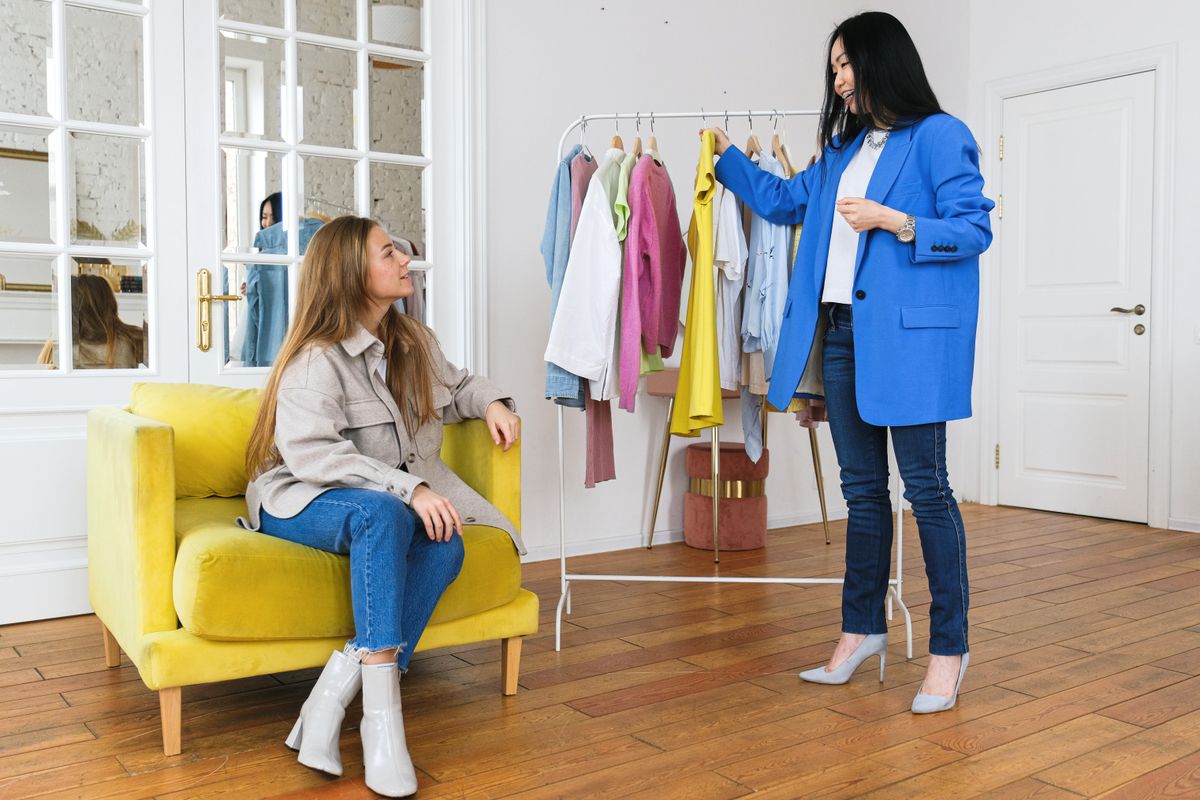
Women’s fashion can become expensive and cluttered when every new trend seems to require another dress, jacket, or pair of shoes. A more flexible approach is to build a reliable clothing foundation and let jewelry change the mood. The same white shirt can feel polished with a fine chain, playful with charms, or dramatic with layered necklaces.
Instead of treating jewelry as decoration added at the last minute, make it part of the outfit’s structure. Scale, metal, texture, and proportion can determine whether familiar clothes feel intentional or unfinished.
Build a Jewelry Wardrobe Around Repeatable Categories
A practical jewelry collection works much like a good clothing wardrobe: it needs dependable basics, a few distinctive pieces, and enough variety to create different combinations. Start by noticing what you actually wear. If your week revolves around knit tops, blazers, denim, and simple dresses, jewelry that works with those pieces will earn more wear than something bought for one hypothetical occasion.
This principle matters for boutiques and independent sellers too. Wholesale Jewelry Website carries more than 10,000 styles, colors, and sizes across categories including rings, necklaces, bracelets, earrings, charms, and pendants, with materials such as stainless steel, sterling silver, tungsten, and gold-finished designs. A broad assortment makes it possible to build collections around different customer styles rather than relying on a single trend.
For your own wardrobe, think in categories: everyday earrings, an adaptable necklace, a few rings, and one or two statement pieces. Filling useful roles first prevents a jewelry box full of attractive items that rarely suit your clothes.
Match Necklace Length to the Neckline
Necklaces have the greatest visual impact when they interact deliberately with the neckline rather than competing with it. A shorter chain or pendant can sit neatly above a crew neck, while an open V-neck often creates room for a pendant that follows its shape.
Button-down shirts provide more flexibility. A delicate necklace can show through an open collar, while a longer piece can create a vertical line over a fully buttoned shirt. High necklines can support longer chains because the fabric provides a simple background.
Before buying another necklace, consider the necklines you wear most. You may discover that one particular length fills a genuine gap better than several similar necklaces.
Use Earrings to Control the Visual Focus
Earrings sit close to the face, so their effect is immediate. Small studs or huggies can provide polish without becoming the main feature, making them useful when an outfit already contains strong color, pattern, or detail.
Larger hoops and statement earrings shift attention upward. They can make a plain T-shirt, sleek knit, or simple dress feel styled with very little additional effort.
Hair changes the equation too. Loose hair may call for more scale or movement, while an updo can make even restrained earrings prominent. The goal is to avoid making every element compete simultaneously.
Layer Necklaces With Deliberate Spacing
Layering works best when each necklace has a visible role. Wearing three chains of nearly identical length often creates tangles and visual clutter rather than dimension.
Begin with separation. Combine a short chain with a medium pendant and, if the neckline allows, a longer third layer. Varying chain weight or texture can make the arrangement feel more intentional.
Let one piece provide the focal point, such as a locket, charm, or distinctive pendant. If the clothing has a complicated neckline or heavy pattern, simplify the layers.
Let Rings and Bracelets Work With Your Sleeves
Hands and wrists become important styling areas when the upper half of an outfit is restrained. Stacking rings can add personality to a minimalist look without changing its overall silhouette.
Balance is more useful than symmetry. Several slim rings can sit on one hand while the other remains relatively simple. Bracelets can work similarly, particularly beside a watch.
Sleeve length should guide the amount of jewelry. Cuffs, bangles, and layered bracelets are easier to see with short sleeves or pushed-up cuffs. Long, detailed sleeves may already provide enough visual interest near the wrist. Rather than adding accessories automatically, ask whether the jewelry has room to contribute.
Mix Metals Through Repetition
The old idea that every metal must match can make a wardrobe unnecessarily restrictive. Mixing warm and cool metals can look cohesive when the combination appears more than once.
A two-tone watch, ring, or necklace can act as a bridge. Alternatively, repeat each metal in separate places: perhaps silver-toned earrings with a gold-toned necklace, then rings containing both tones.
Consistency matters more than perfect matching. If one contrasting piece appears completely isolated, it may look accidental. Repeating its tone somewhere else creates a relationship.
This is useful when handbags, watches, or favorite pieces already contain different finishes.
Give Statement Jewelry a Quiet Background
A statement piece needs visual space. A sculptural necklace, oversized earrings, bold cuff, or cluster of rings is easier to appreciate when surrounding elements are relatively restrained.
This does not mean statement jewelry belongs only with neutral clothing. Strong color can provide an excellent background, provided the neckline, pattern, and other accessories are not all demanding equal attention.
Choose the focal point before finishing the outfit. If the earrings are dramatic, consider skipping the necklace. If a necklace carries the look, keep nearby accessories simpler.
It can also refresh older clothing: a simple black dress or solid knit can take on a different personality with one confident piece.
Use Jewelry to Create Outfit Formulas
The easiest wardrobes rely on formulas rather than daily reinvention. Jewelry can make those formulas feel different without changing their clothing foundation.
For work, a formula might be trousers, a knit top, loafers, small earrings, and a restrained chain. On another day, the same clothes can take a stronger direction with hoops, stacked rings, and a watch. A weekend formula might pair denim and a white shirt with layered necklaces or a charm pendant.
Photograph combinations that work particularly well. A small album of reliable outfits removes guesswork and reveals which jewelry receives consistent use, making future shopping more disciplined.
Jewelry deserves the same periodic review as clothing. Lay everything out and identify what you wear, what needs repair, what no longer suits your style, and what is difficult to combine.
Store pieces so they are visible and accessible. Necklaces that remain tangled in a drawer or earrings separated from their pairs effectively disappear from the wardrobe. Simple organization can increase use without requiring another purchase.
Pay attention to care instructions for different materials and finishes, since cleaning and storage needs can vary. Remove pieces when appropriate for activities that could damage them.
A strong jewelry-led wardrobe is not necessarily large. It is a collection in which pieces have clear roles and can repeatedly transform clothes you already enjoy wearing. When accessories are chosen for proportion, versatility, and compatibility rather than novelty alone, getting dressed becomes more creative without requiring a constantly expanding closet.